Case study
Kaiser Permanente Mobile App Redesign and Enterprise Design System
NDA-protected details—visuals have been abstracted
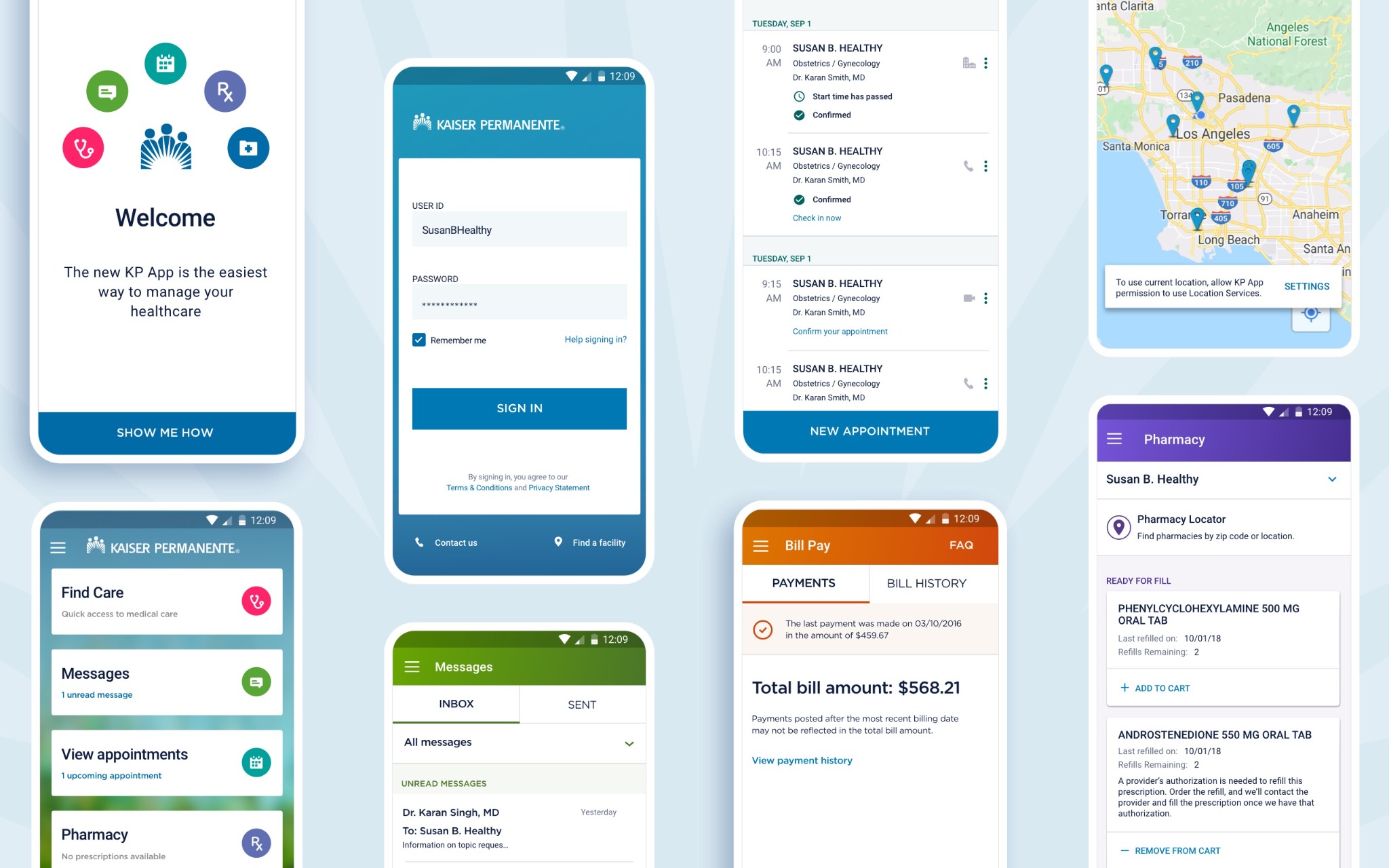
Why the Mobile Platform Needed to Evolve
Kaiser Permanente’s mobile platform needed to evolve as member expectations rose and digital-health, telehealth, and retail-care competitors raised the bar for connected healthcare experiences.
Members needed to use the app during time-sensitive and personal moments: coordinating appointments and family access, checking lab results, managing prescription needs, and resolving billing or care questions.
At the same time, the product ecosystem was fragmented. Feature teams needed to move quickly, but inconsistent patterns, legacy workflows, limited documentation, and platform differences across iOS, Android, and web made it harder to scale quality.
The challenge was not only redesigning screens. It was helping Kaiser Permanente create a more durable product system for mobile healthcare delivery.
Before
The mobile experience depended on fragmented workflows, inconsistent UI patterns, and feature-specific solutions that were difficult to scale across teams and platforms.
After
A more cohesive mobile platform connected member needs, product delivery, accessibility, and design-system foundations into a scalable healthcare experience.
My Role in the Product and Platform Shift
As Lead UX Designer, I helped guide the mobile app redesign across iOS and Android while building the team, rituals, and design foundations needed to support long-term product scale.
I grew the app design team from 2 to 8 UXers and supported 6 scrum teams across California, Colorado, and Bangalore. I also helped coordinate a 35-person cross-functional team across product, design, research, content, accessibility, engineering, data services, compliance, and leadership stakeholders.
My work centered on four priorities:
- Leading mobile redesign work across high-value healthcare workflows and member tasks
- Aligning user needs, business goals, roadmap priorities, and platform constraints across teams
- Establishing reusable design-system foundations across iOS, Android, and web
- Strengthening product delivery through research, prototyping, accessibility, documentation, and cross-functional decision-making
The role required moving between product strategy, interaction design, team leadership, design systems, and execution support—helping teams deliver quickly while building stronger foundations for future work.
Designing Around High-Value Member Tasks
Members did not use the app casually. They often arrived with urgent, personal, or emotionally loaded needs: checking lab results, managing prescription needs, coordinating appointments and family access, or resolving billing or care questions.
The experience needed to feel reliable, clear, and easy to move through, even when the underlying healthcare system was complex.
I helped design and improve workflows across 8 major product areas:
- Prescription management
- Bill payment
- Test results
- Appointment booking
- Secure messaging
- Video visits
- Digital ID cards
- Facility search
Across these areas, the design work focused on reducing friction, clarifying next steps, improving task completion, and making high-value healthcare actions easier to access from mobile devices.
Scaling the Team and Delivery Model
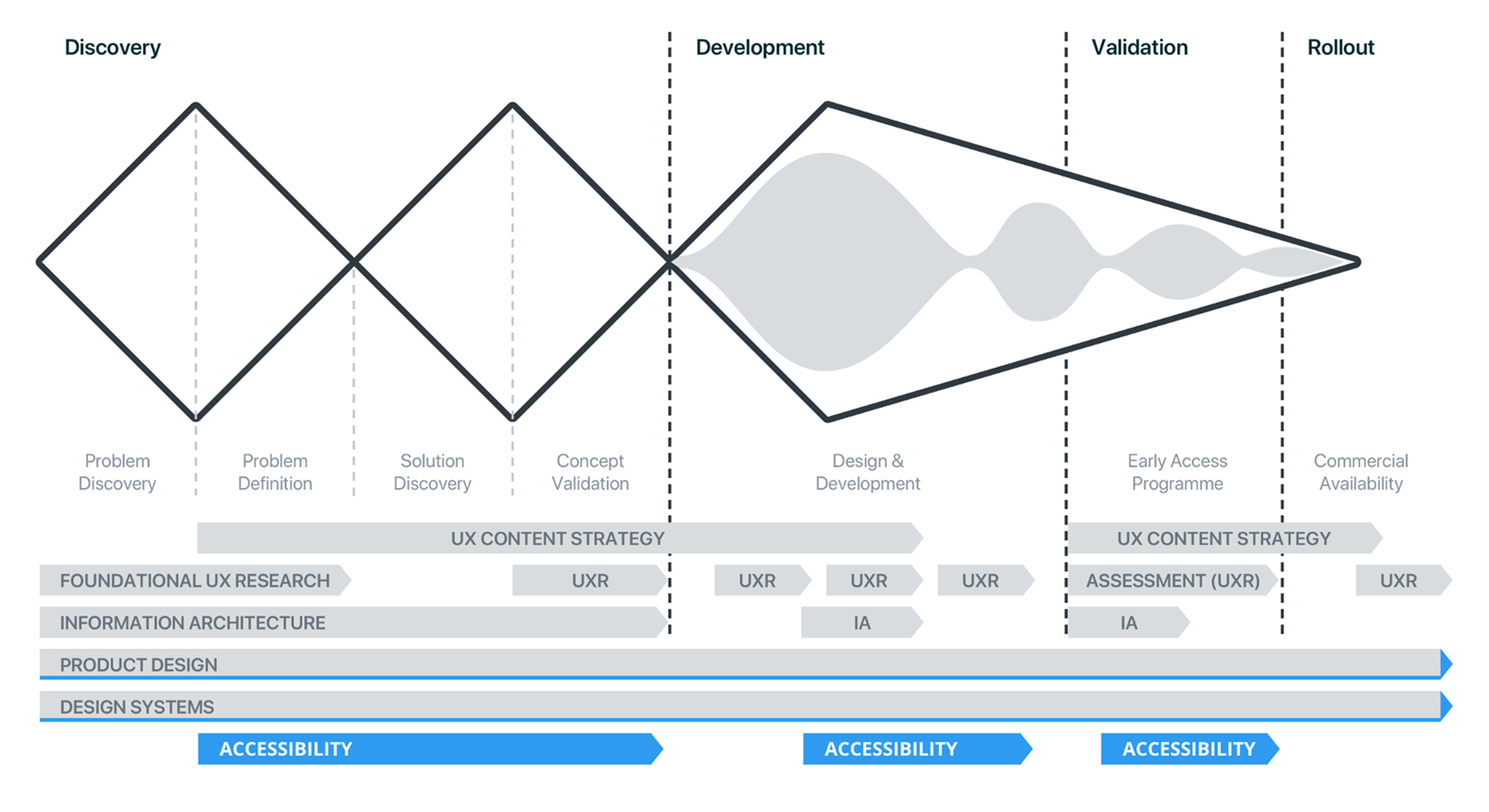
The work required more than feature execution. It required a delivery model that could keep multiple teams moving in the same direction while improving the quality and consistency of the member experience.
I helped grow the app design team from 2 to 8 UXers, giving the program the design capacity needed to support parallel feature work, 6 scrum teams, cross-platform design quality, and stronger product execution.
I facilitated scrum rituals, stakeholder workshops, design reviews, research readouts, and product alignment sessions to help teams make decisions faster and with better shared context.
The approach included:
- Grounding product direction in research, analytics, usability findings, and member context
- Creating concepts, flows, and prototypes to evaluate interaction models and service constraints
- Testing prototypes to validate tasks, resolve tradeoffs, and refine interaction patterns
- Partnering with engineering and product leads to sequence work across roadmap priorities
- Modeling UX leadership practices that improved decision-making across teams
This helped the team move from isolated feature delivery toward a more coordinated product evolution across the mobile platform.
Building Design System Foundations
Scaling the mobile platform also required stronger foundations for how Kaiser Permanente designed, documented, and delivered product experiences across teams.
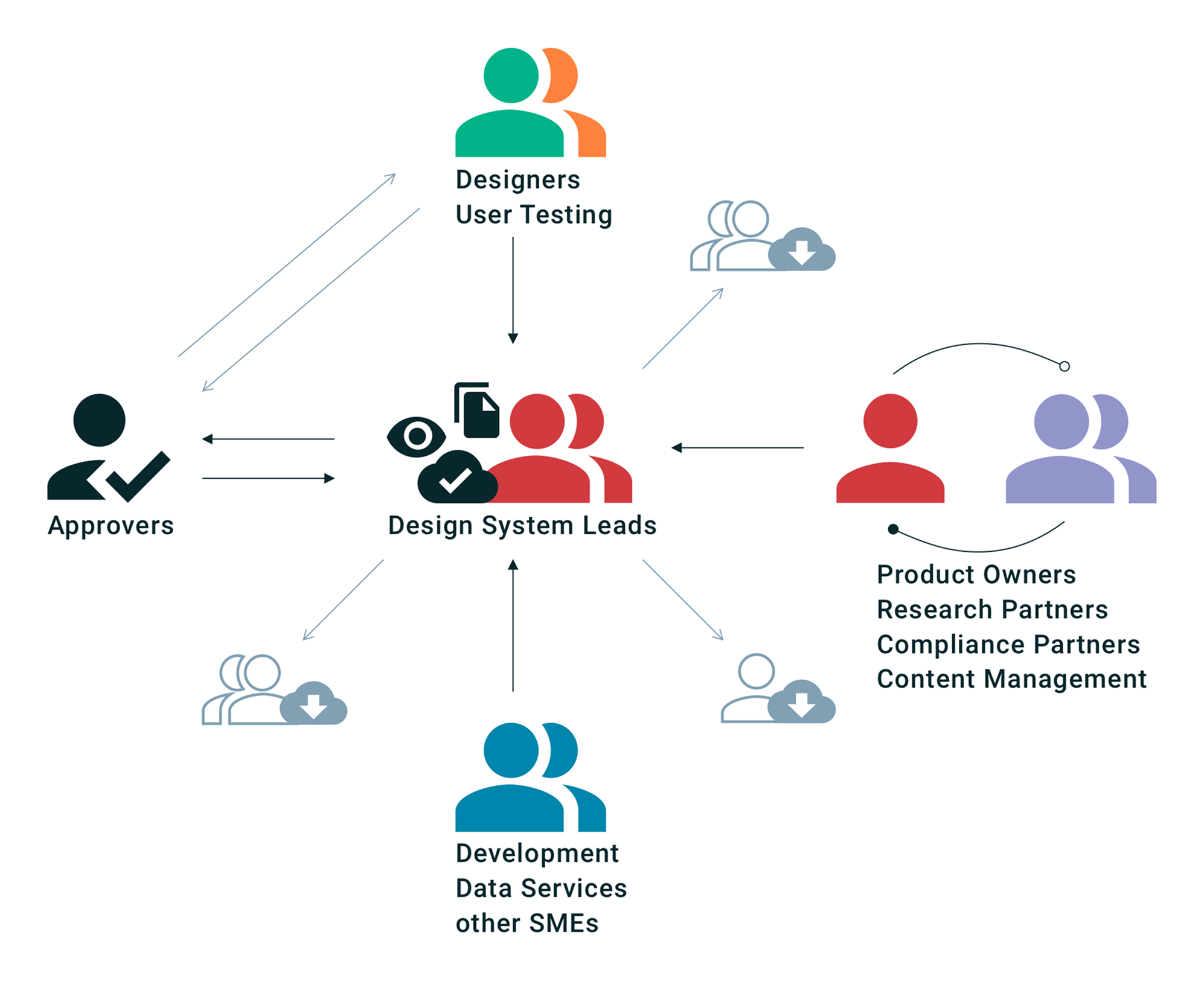
I helped turn fragmented UI patterns into reusable product foundations, from Atomic Design elements and design tokens to flexible layouts, modules, interaction patterns, and implementation guidance. The goal was to move beyond one-off feature decisions and create durable product infrastructure for iOS, Android, and web experiences.
This work helped teams reduce fragmentation, improve handoffs, and make product quality easier to scale.
Key contributions included:
- Turning inconsistent mobile patterns into reusable design-system foundations
- Introducing tokens, flexible layouts, and modular patterns that could support multiple product areas
- Documenting guidelines and component libraries to improve collaboration and engineering handoffs
- Connecting accessibility requirements to reusable patterns instead of treating them as one-off feature checks
- Establishing stronger team habits around consistency, reuse, and scalable product quality
The design system became more than a UI library. It created a shared language for product decisions across designers, engineers, accessibility partners, and product teams.
Product, Platform, and Team Impact
This work transformed both the member experience and how digital products were delivered at Kaiser Permanente.
Product growth and member experience
Grew monthly active users by 265% across iOS and Android and increased member satisfaction from 86% to 92% across digital platforms.
Platform delivery and system maturity
Delivered 8 major product areas across care access, messaging, pharmacy, billing, and service navigation while establishing stronger design-system foundations for consistency, accessibility, and reuse.
Team leadership and organizational impact
Orchestrated a 35-person cross-functional team, expanded the app design team from 2 to 8 UXers, and earned three consecutive annual achievement awards for leadership, organizational influence, and product impact.
The broader redesigned digital experience contributed to external recognition, including Fast Company and Webby honors.
The broader impact went beyond the redesigned mobile app. It created a more scalable product operating model—connecting member needs, mobile product delivery, design-system maturity, and cross-functional execution into a platform that could keep evolving.
Reflection
This work reinforced that product quality at scale depends on reusable systems, not just individual features. The most meaningful shift was connecting feature delivery, member experience, and design-system maturity into a single operating model.
Given more time, I would have expanded the design system through stronger governance, contribution workflows, adoption measurement, and clearer cross-platform ownership.